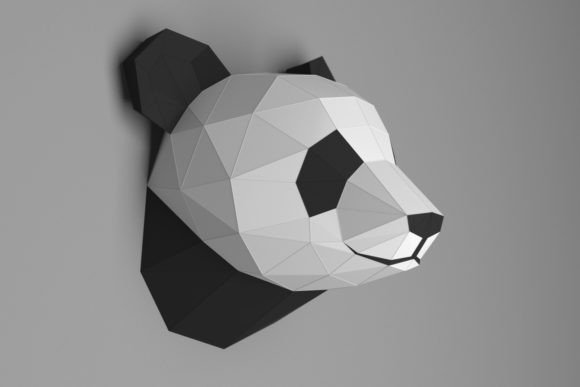
PANDA HEAD: A Designer’s Take on 3D Paper Craft Appeal
As an embroidery designer who spends half my life staring at digitized stitches and the other half troubleshooting hoop tension, I approach every new design with a healthy dose of skepticism. We have all been there: you download a digital embroidery file that looks crisp in the preview, only to find it turns into a tangled mess of thread breaks and puckering on actual fabric. However, when I first encountered PANDA HEAD, my initial reaction was not about stitch counts or underlay settings, but about visual personality. This is not your standard flat vector clipart. It carries the distinct charm of a paper craft project, translated into a format that suggests depth and dimension.
The product description labels this as a 3D SVG within the Animals category, noting it originates from paper decor PDF DXF digital files. For those of us in the craft business, this distinction matters. It tells me the design likely relies on clean lines, bold shapes, and perhaps layered elements rather than intricate, photo-realistic shading. In the world of machine embroidery, less is often more, especially when we are talking about items that need to withstand washing and wearing. Let’s break down how PANDA HEAD performs in real-world scenarios, from custom apparel to boutique merchandise.
First Impressions: Mood and Visual Personality
The immediate mood of PANDA HEAD is playful yet structured. Pandas are universally loved, but they can easily slip into cliché territory if the design is too cartoonish or overly complex. What strikes me here is the geometric influence inherent in its paper-craft origins. The lines appear deliberate, suggesting that the design was built to be assembled or viewed in layers. For an embroidery project, this translates well into clarity. When you are stitching on textured fabrics like terry cloth towels or thick denim, fine details get lost. A design with strong, recognizable shapes holds its ground better.
I imagine this design working beautifully for clients who want something modern but approachable. It does not scream "nursery only," which expands its market potential. While it is certainly suitable for baby embroidery, the clean aesthetic allows it to sit comfortably on adult apparel, tote bags, and home decor items without feeling juvenile. This versatility is gold for an Etsy seller or small shop owner looking to maximize the utility of a single design asset.
Real-World Application: From Sweatshirts to Tote Bags
Let’s talk practical application. I recently worked on a line of custom apparel for a local bookstore, and a design like PANDA HEAD would have been perfect for their eco-friendly tote bag collection. Here is why: tote bags are often made from canvas or heavy cotton, fabrics that have a visible weave. A design with too much density can cause the fabric to pucker or the bag to feel stiff. If PANDA HEAD maintains the open, layered feel of its paper origins, it likely uses a balanced mix of satin stitch borders and open fill areas. This keeps the finished product flexible and soft to the touch.
Consider sweatshirt embroidery. Hoodies and crewnecks are fleece-lined or thick, meaning the needle has to punch through multiple layers. A bulky design can feel heavy and uncomfortable against the skin. If this design is optimized correctly, it should sit lightly on the chest or sleeve. I would recommend testing it with a lighter weight stabilizer to avoid adding unnecessary rigidity. For baby clothes, the story is similar but with higher stakes. Parents want softness. If you are using this for a onesie or a baby blanket, ensure you are using high-quality, soft rayon or polyester threads. The contrast of black and white thread colors is classic, but on a baby item, consider softening the black to a charcoal or navy to reduce visual harshness while maintaining the panda identity.
Navigating Fabric and Hoop Constraints
No design is universal, and PANDA HEAD requires thoughtful placement. One area where I would exercise caution is curved surfaces, such as caps or hats. Caps have a limited hoop size and a challenging curvature. If the design is wide, it might distort around the front panel. I always advise checking the exact dimensions before hooping. If the design is too large, it may need to be scaled down, which could compromise the integrity of small details. Always test on scrap fabric first, specifically the same type you plan to use for the final product.
Dark fabrics present another challenge. Panda designs are inherently high-contrast. On a black hoodie, the white parts of the panda will pop, but the black parts will disappear unless you use a technique like applique or a dense satin stitch border to define the edges. If you are stitching on dark fabric, consider using a light-colored backing or adjusting the thread colors slightly to ensure the design remains visible. Conversely, on light fabrics, ensure your black threads are high quality to prevent a fuzzy, gray appearance after washing.
Stitch density is another critical factor. Since this design stems from paper decor concepts, it might feature sharp corners or tight angles. In embroidery, sharp corners can lead to thread bunching. I recommend reviewing the digitizing closely. If you see areas where the stitch direction changes abruptly, you might need to add tie-offs or adjust the pull compensation in your software if you have access to the source file. If you are buying a finished digital embroidery file, look for previews that show close-ups of the stitching to gauge how clean these transitions are.
Commercial Value and Brand Consistency
For commercial embroidery projects, consistency is key. Your customers buy from you because they trust your quality. A design like PANDA HEAD can become a signature element of your brand if used consistently. Imagine using it across a range of products: embroidered patches for jackets, pillow covers for home decor, and even kitchen towels. The cohesive look helps build brand recognition. However, this only works if the execution is flawless. Poor tension, loose threads, or misaligned hoops will undermine the professional look you are trying to achieve.
When creating printable mockups for your Etsy listings or website, remember that digital representations can be deceiving. A 3D SVG might look stunning on a screen with perfect lighting and shadows. On fabric, it is flat. Use your mockups to show the texture of the thread and the drape of the fabric. Show the design on different backgrounds to help customers visualize it in their homes or on their bodies. This transparency builds trust and reduces return rates.
Practical Notes for the Embroidery Designer
Before you commit to producing a batch of finished products, take these steps:
- Test on Scrap Fabric: Never skip this step. Use the exact fabric and stabilizer combination you plan to use for production.
- Check Thread Contrast: Ensure your black and white threads provide enough contrast on your chosen fabric color.
- Review Stitch Density: Feel the back of the test stitch. Is it too stiff? If so, consider reducing density or changing stabilizers.
- Confirm Hoop Size: Make sure the design fits comfortably within your hoop without hitting the edges.
- Inspect Small Details: Look for any tiny elements that might not stitch out cleanly. Remove or simplify them if necessary.
- Verify Licensing: Since this is a digital product derived from paper decor files, confirm whether the license allows for commercial use of the embroidered items. Some designers restrict the sale of physical goods made from their digital files.
In conclusion, PANDA HEAD offers a refreshing blend of modern geometric style and classic animal appeal. It is not just a cute icon; it is a versatile design asset that, when handled with technical care, can elevate your handmade products. Whether you are creating personalized gifts, holiday embroidery for a boutique, or everyday wearables, this design has the potential to stand out. Just remember: the magic lies not just in the file, but in how you bring it to life on fabric. Treat it with the respect it deserves, test thoroughly, and let your craftsmanship shine.